Robovision Agtech Robotics

Fresh packet assembly

The recipe is a picture. The vegetables will not keep it.

A carton moves along the conveyor. A robot takes what the recipe asks for from a crate of bulk vegetables, holds each piece to an inspection point, and sets it in the box. People do this by hand today, in an order the recipe already defines.

Picking and grading are delivered work with this partner. The open problem is the place.
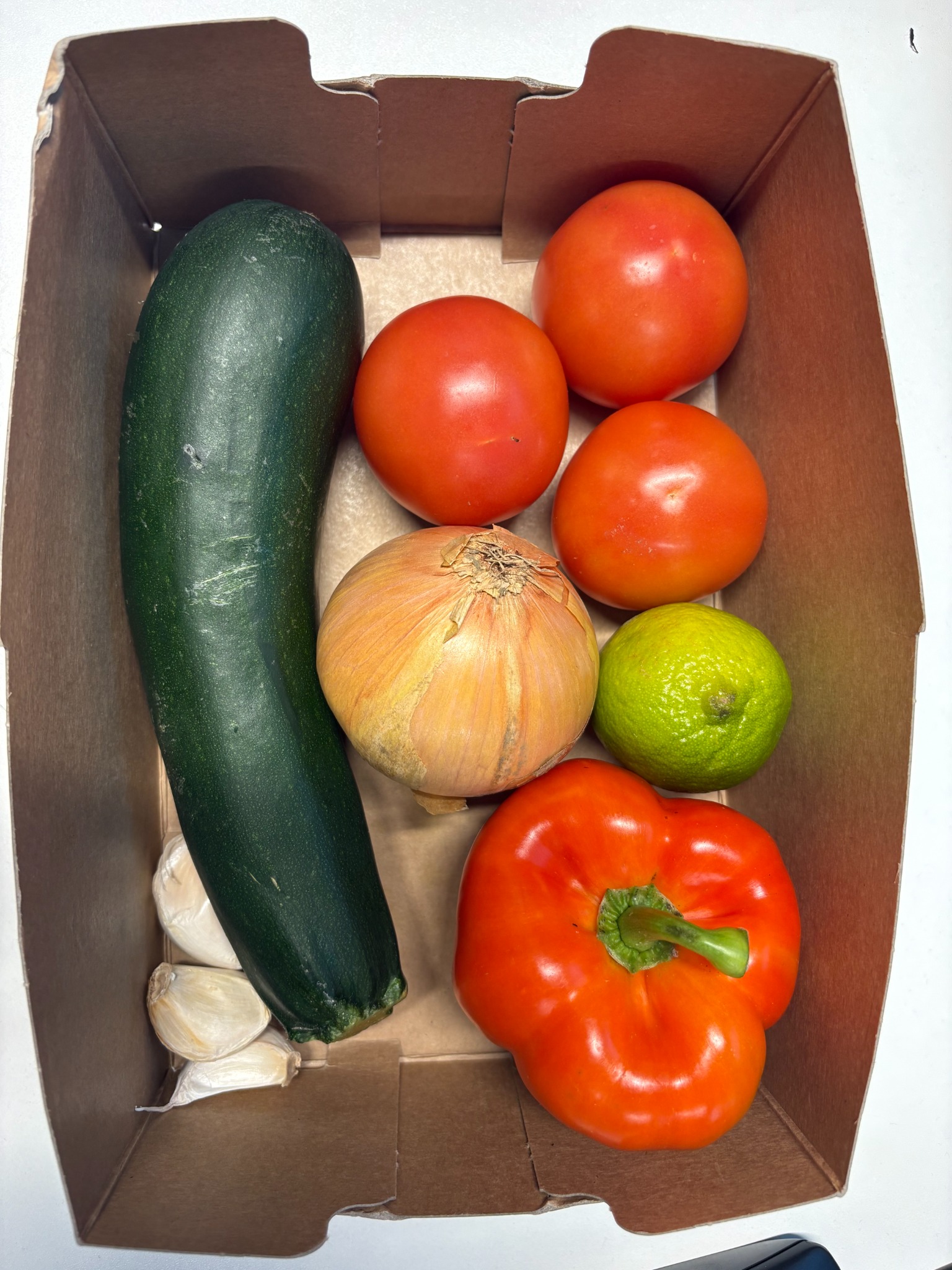
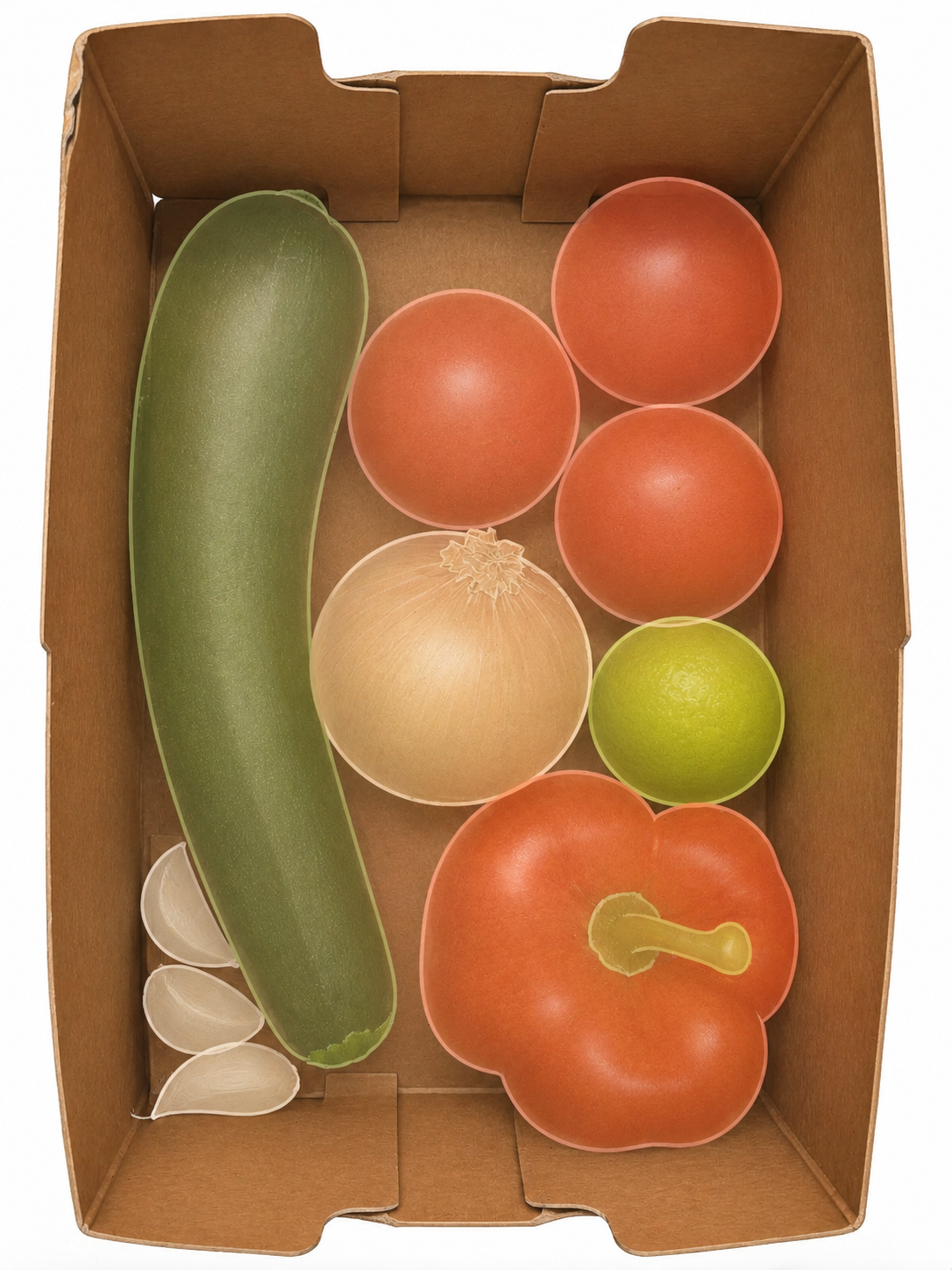
Top view of a finished cardboard meal kit: courgette, three tomatoes, onion, lime, red pepper, and garlic cloves.
The kit, as it has to leave the line.
The same carton drawn as a target pattern, each vegetable in its planned place.
The arrangement the recipe specifies.

Three problems on one conveyor.

The box stops beside a crate. The arm takes a piece, passes the inspection point, and commits it to a position. Two of those problems we already run. The third is this project.

  1. CrateBulk, one vegetable
  2. PickThe piece, the grasp
  3. GradeKeep, or reject
  4. PlaceA position in this box
  5. CloseUnder the lid
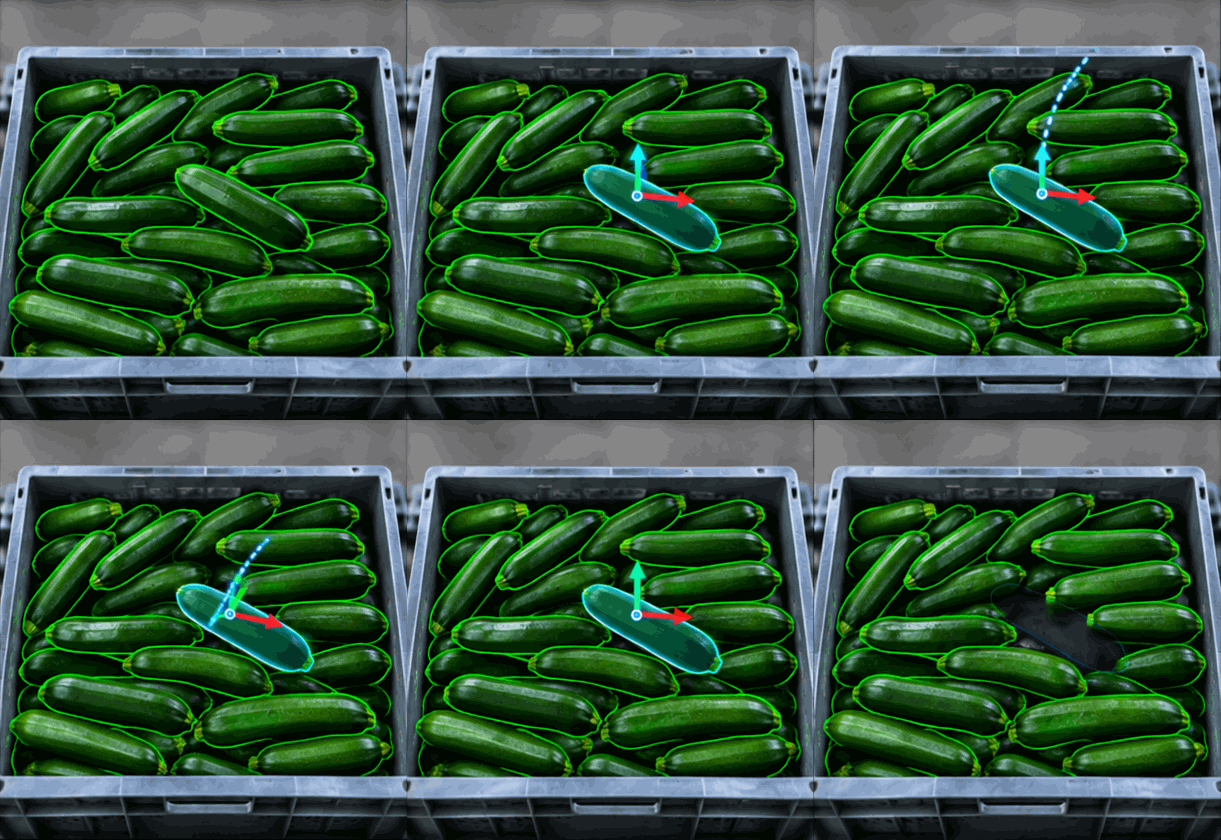
Animation of courgettes in a crate, each outlined as a pick candidate.

Picking

Delivered

  • The crate, as it actually is
  • Which pieces can be taken
  • The grasp
  • The path, and the move
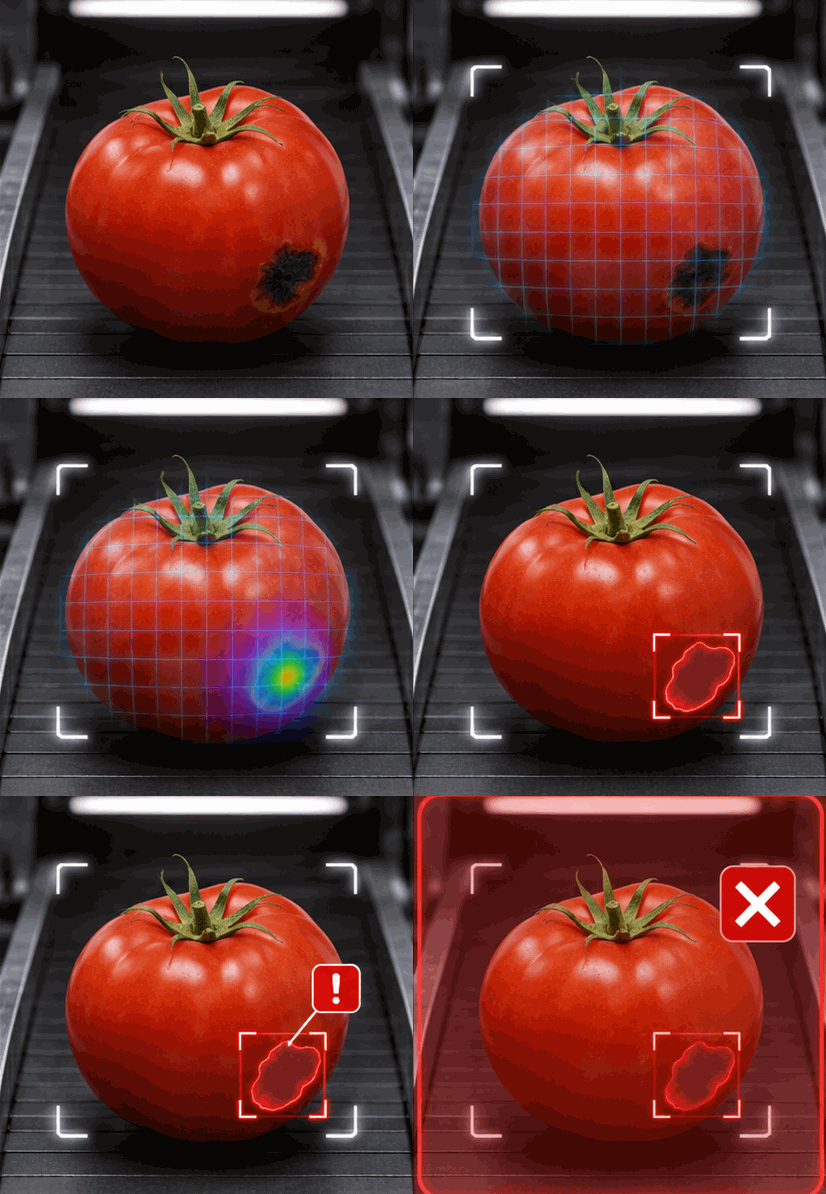
Animation of a tomato on an inspection belt with a dark rotten spot.

Grading

Delivered

  • The piece in view
  • A defect, such as the black spot
  • The measurement
  • Keep, or send it out

The pattern is the goal. This box is the constraint.

Placing

The open problem

  • The recipe, and its order
  • The free space in this box
  • A piece that is a different size or shape
  • A piece that moved after it was set down
  • A lid that still has to close

The pattern breaks in two ways.

Both happen with ordinary vegetables. A fixed picture of the box cannot survive either of them.

01 โ€” Shape and size

The piece is not the one the pattern assumed.

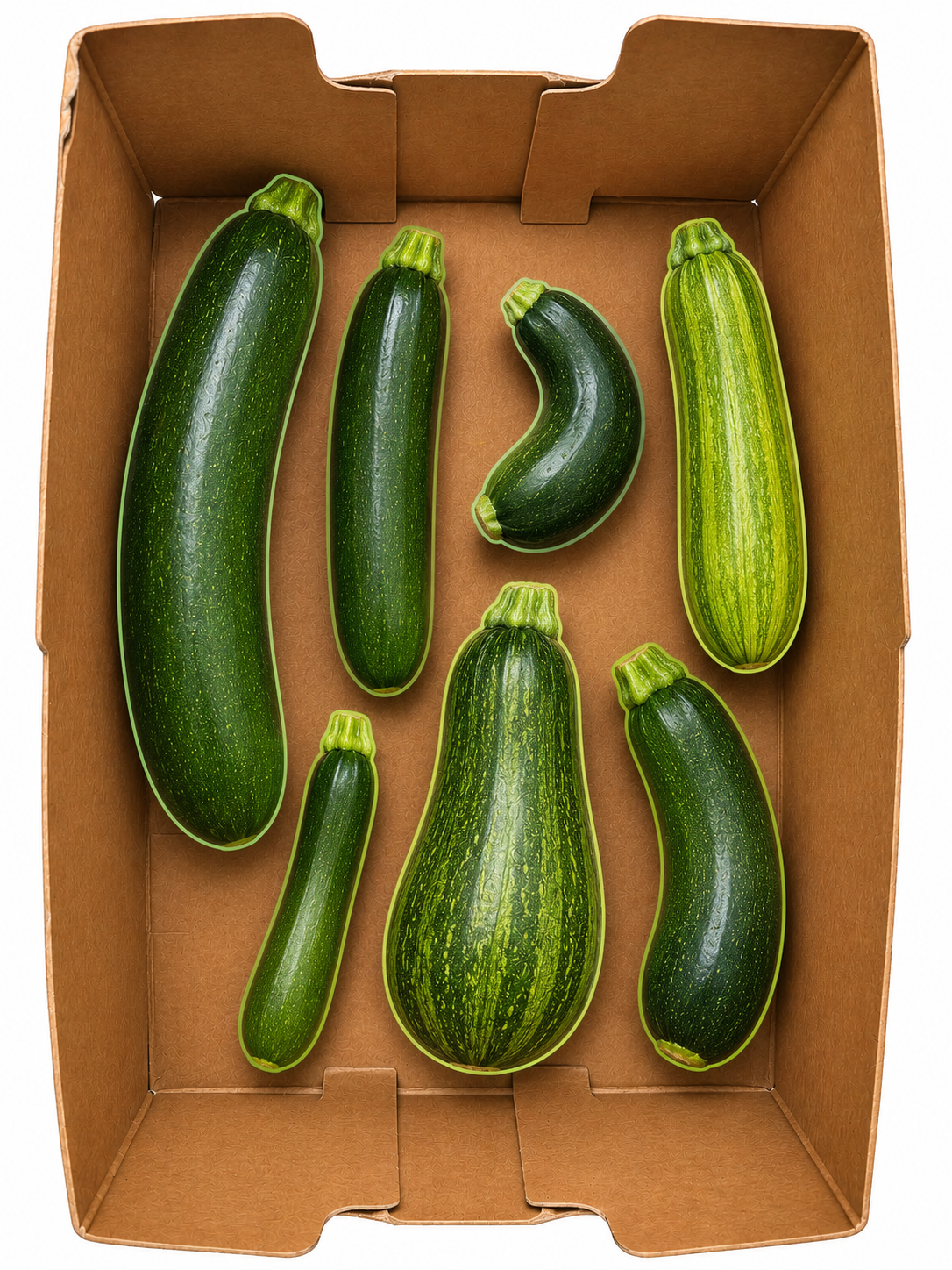
A courgette can be shorter, thicker, or more curved than the slot drawn for it. The gap the recipe counted on is then gone. The next pieces have to live with the one that is actually in the gripper.
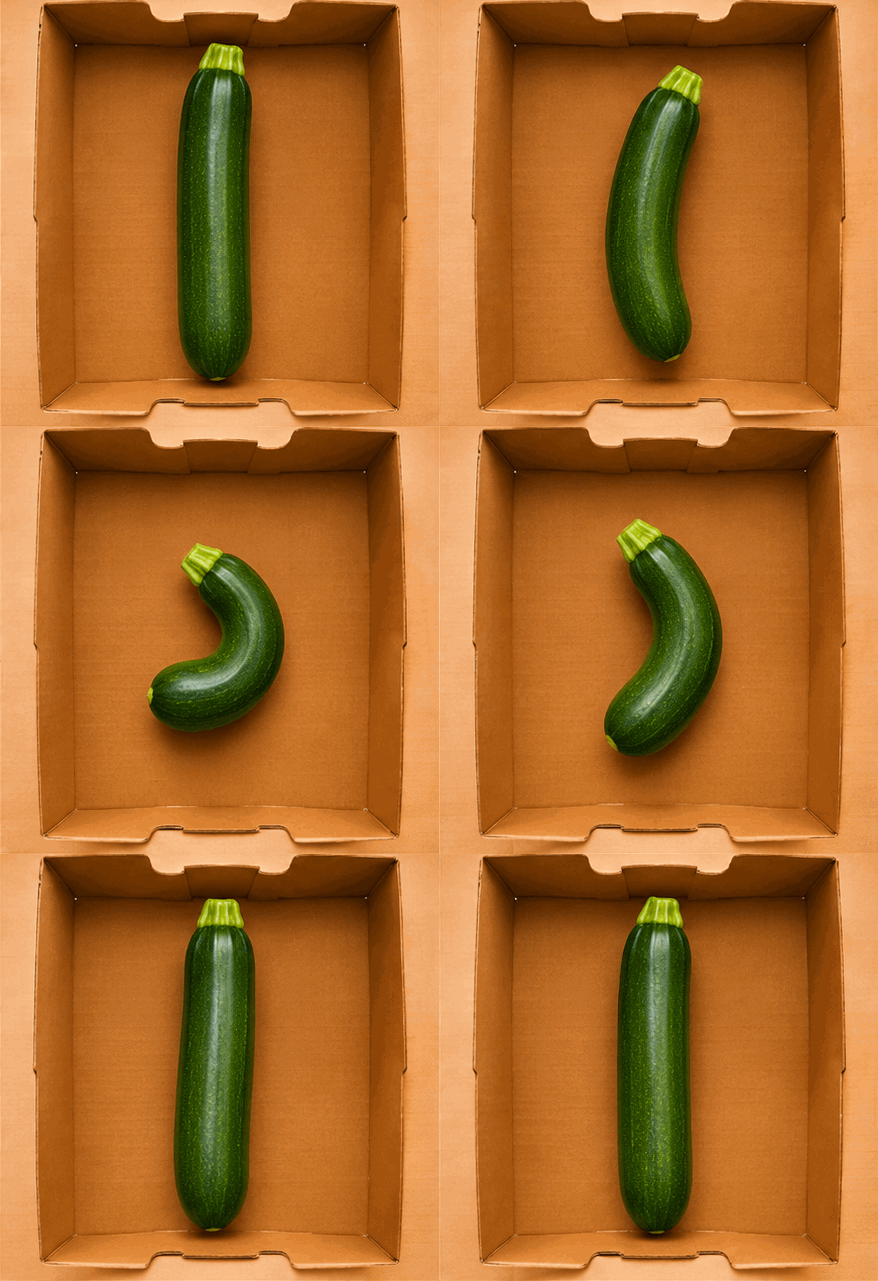
Animation of a single courgette in a carton changing length and curve.

Illustration

One courgette, changing as it would from piece to piece.
Top view of one carton holding courgettes of very different lengths and curves.

Illustration

The same carton, filled with the range we actually see.

02 โ€” After the place

The piece does not stay where it was put.

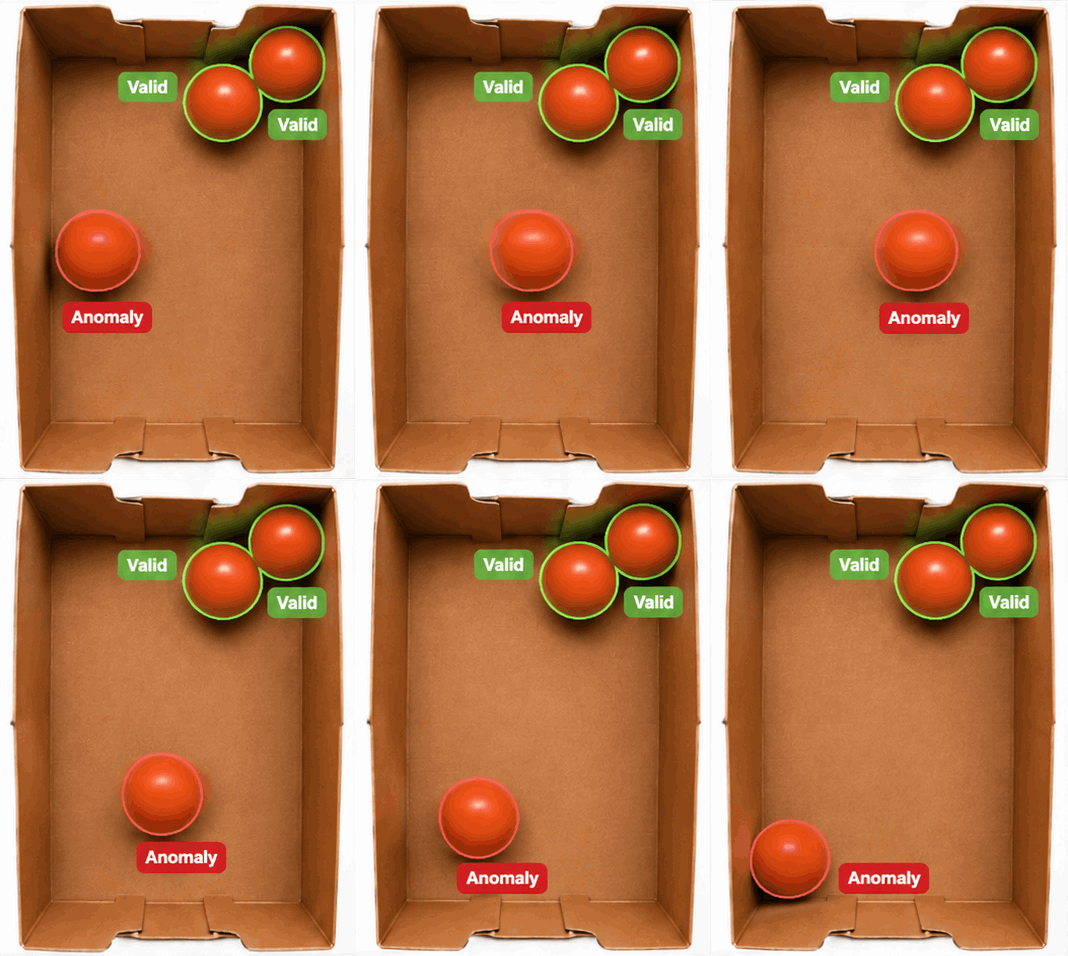
A round piece rolls. The plan is now a picture of a box that is no longer there. Whatever is placed next has to be chosen from the box the camera sees, including which pieces held and which one moved.
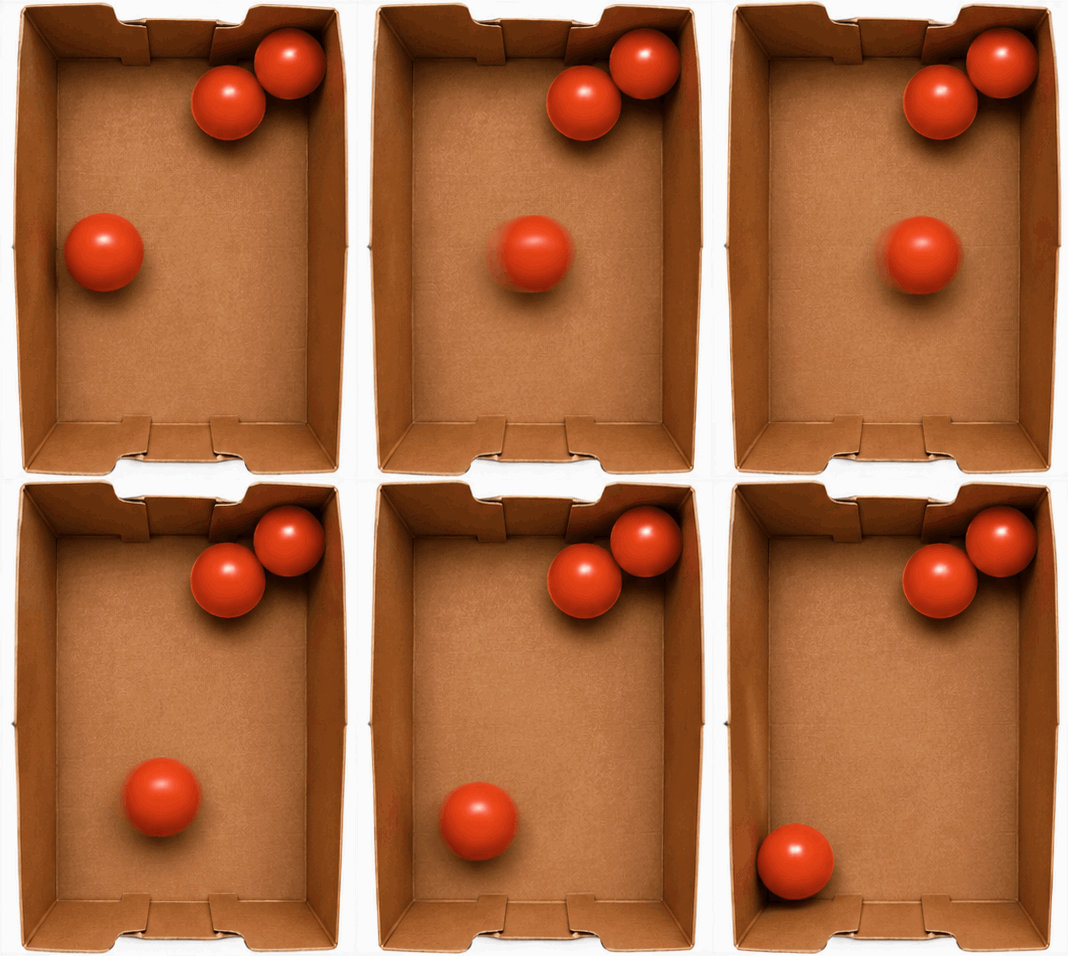
Animation of three tomatoes in a carton, one rolling away from the other two.

Illustration

Two stay. One rolls toward the middle.
The same carton, the still tomatoes marked valid and the moving tomato marked as an anomaly.

Illustration

The camera can say which placement still holds.
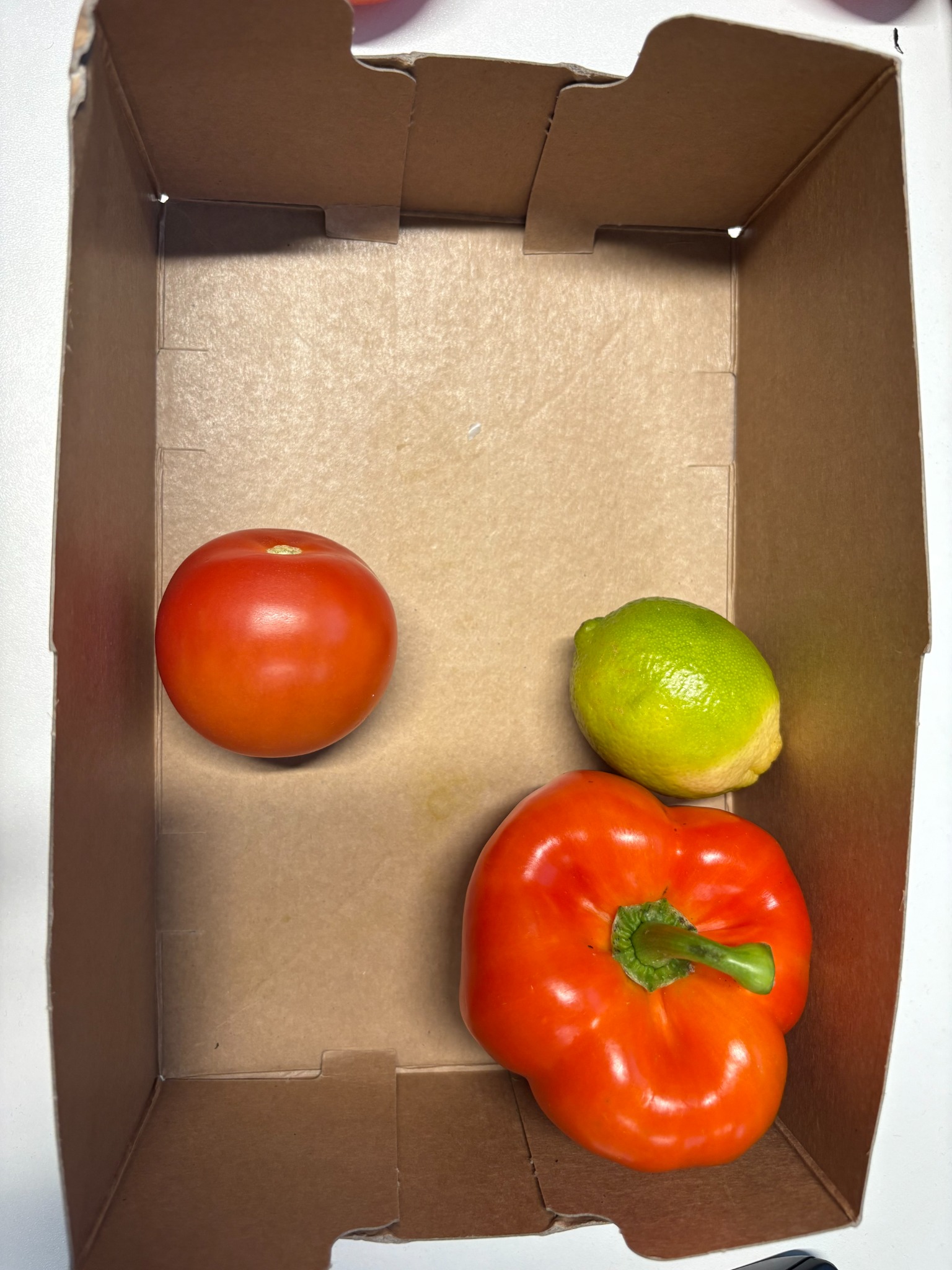
The real carton part way through a kit: one tomato, one lime, one red pepper, and a lot of empty floor.
The real carton, part way in. Most of the floor is still a decision.

First answer

Place against the box you can see.

A stereo camera looks down into the carton and builds a 3D map of what is already inside. The arm already knows the size and shape of the piece it is holding. The next pose is chosen for this piece and this box.

  • Hard rules stay in force.A soft piece does not go under a hard one. A piece rests on the floor, or on something that can hold it.
  • The lid is the limit.The box is finished only if it closes. Nothing is planned past that height.
  • The pattern is the goal.The camera may leave it when the piece in the hand, or the box as it is, makes the pattern impossible.
The placer, on a piece that is longer and more curved than the nominal one. The layout is rebuilt around it. Recording of the algorithm, about 40 seconds.
A full kit, played in the order the robot would set it down. Recording of the algorithm, about two minutes.

Open the placer and try a box

Second answer

If it has already moved, put it back.

Choosing the next pose does not return a tomato that has rolled. When the camera says the last piece is somewhere else, a further move corrects it. This track is physical: an arm, driven as a vision-language-action policy, that can nudge or replace.

Two hands on the carton, with the hands tracked, then the gripper. The camera names each piece as it arrives. Bench film, about 80 seconds.

Train it from the line as it is today.

Operators already pack these boxes. Filming that work, and tracking the hands and the pieces with the Robovision stack, is the demonstration set for the correction. The film teaches the move. The arm still has to be proven on the conveyor.

One operator, one box. Hands as a skeleton, each piece named and outlined. About 20 seconds.

Every piece

Adapt the placement.

Read the 3D map. Read the piece in the gripper. Choose the next pose under the rules, and under the rim.

Only when the last pose did not hold

Correct it.

The camera has seen a move. The arm puts that piece back, or makes room, before the recipe continues.

What we would count, on the line, with you.

These are the numbers that tell us the placing is working. We are not claiming them yet.

  • Boxes that closeThe lid shuts on a finished kit.
  • Pieces left outWhat the rules or the height refused.
  • DamageCrushed, split, or bruised by the place.
  • Cycle timeFrom pick to the box leaving the station.
  • Placements adaptedThe pose left the pattern because of this piece or this box.
  • Placements correctedThe arm went back because a piece had moved.